
The gaps you cannot see set your ceiling.
Bring the problem. We bring the person who has already solved it.
Greater Washington
Bring the problem. We bring the person who has already solved it.
Experts who talk to each other, already coordinated around you.
Most owners do not yet know which side of that line they are on.
Five questions. No account, and no email to start.
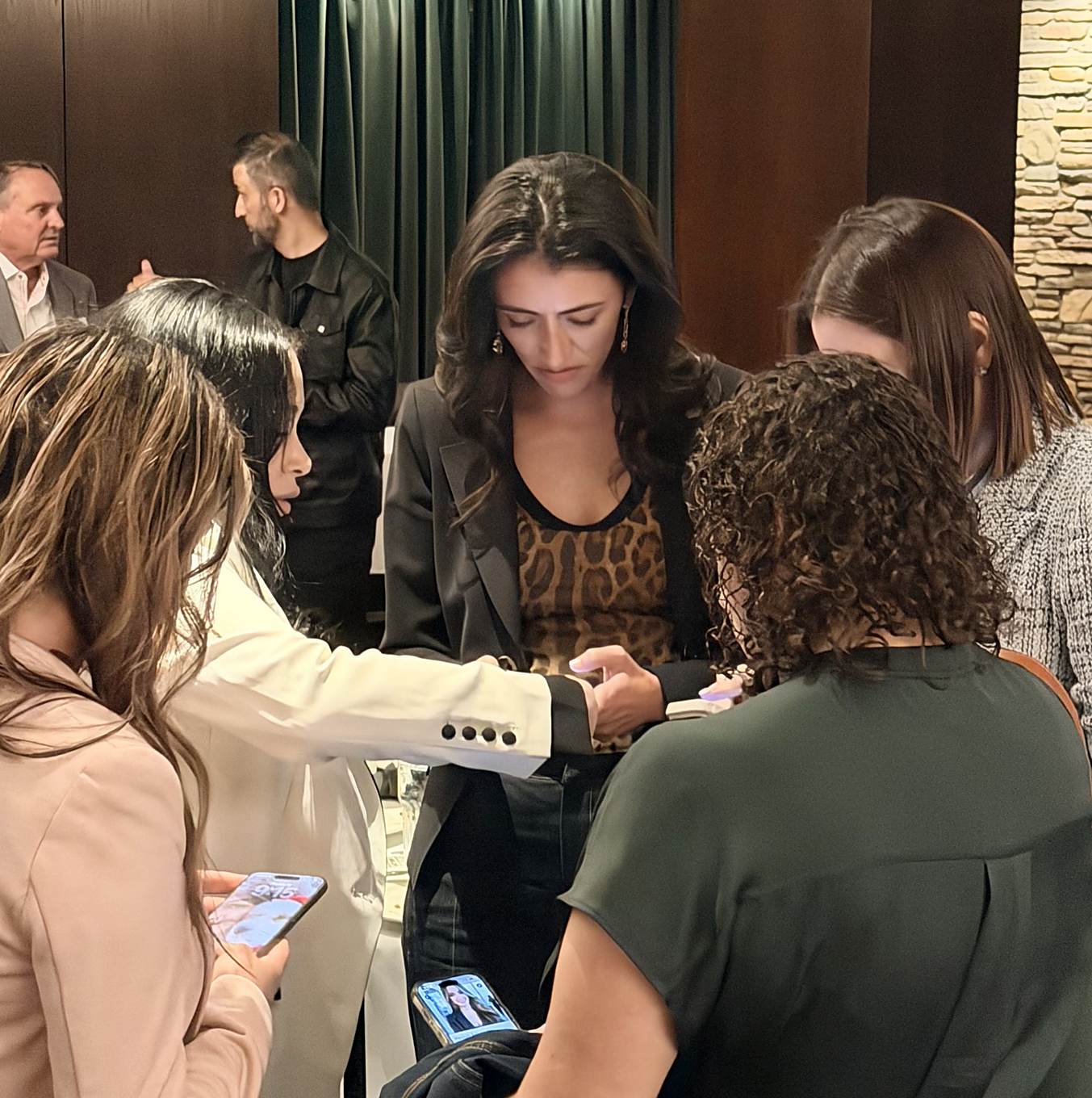
Quarterly gatherings. No panels, no pitches, no name tags.
Start with what you can already see. The Owner360 points you toward the condition that is most likely holding the business back, and shows you the functions connected to it.
Your M&A advisor does not talk to your operations consultant. You get advice in fragments, and when the pieces conflict, you are the one who reconciles them.
Optimises for this year’s tax bill, because that is the number they are measured on. The decision that lowers tax this year can also lower the multiple in three.
Optimises for the covenant, because that is the number that protects the loan. Nothing in that view is concerned with what the business is worth to a buyer.
Optimises for the business you actually have to run on Monday morning. That reconciliation lands on your desk, unnamed and unpaid, every single week.
The business does not experience operations, capital, talent and wealth as separate problems. Neither should the people advising you. The lines between these areas matter as much as the areas themselves.
Whether the work runs on documented process or on individual memory. When it runs on memory, capacity is capped by the people who hold it.
Whether demand arrives reliably or by referral luck, and whether the reason you win is understood well enough to repeat.
Whether pricing reflects the true cost of delivery and risk, and whether profitability is understood by customer and by line.
Whether cash is forecast far enough ahead to prevent surprises, and whether the structure supports the next stage rather than the last one.
Whether managers hold real authority with measurable responsibility, or whether every decision of consequence still routes to the owner.
Whether the exposures that would matter in a diligence process are known now, while they are still cheap to fix.
Whether the balance sheet of the business and the balance sheet of the household are being planned as one picture or two.
Whether you could choose a transaction rather than be forced into one, which is decided years before anyone runs a process.
None of it is a membership tier. You attend when it is useful, you run the Owner360 when you want a read, and you engage a professional only when you decide to.
Gatherings bring together owners and CEOs responsible for meaningful operating decisions. People who understand what it means to carry a P&L.
BCA professionals coordinate their perspectives around the owner, because decisions in one area affect all the others.
The Owner360 points you toward the likely constraint and the functions connected to it, then goes deeper only if you want it to.
There is no membership fee for business owners. If and when you need expertise, it is here. Until then, you are not being sold to.
BCA exists because owners were getting excellent advice from people who never spoke to each other. John and Erika built the alliance to close that distance.

Managing Partner, The Capitol Bay Group at LPL Financial. Works with owners on the decisions where the business and the household stop being separate questions.

Award-winning M&A advisor, entrepreneur and dealmaker. Works with owners on readiness long before a process starts, when the value is still moveable.
Every figure here comes from a named source with a sample
behind it, and every chip links to it. Where an often quoted
number could not be traced to a study, it is not on this page.
of deals that collapsed after a signed letter of intent in 2025 died on what diligence found. Not on price, and not on financing.
of formal business valuations were carried out with a sale in mind. Estate planning was the top reason at 26%, then tax planning at 17%.
of US employer business owners are 55 or older. The transition is not a future event for this generation of owners, it is the current one.
of owners want to exit within ten years, and 49% within five.
EXIT PLANNING INSTITUTE, 2023of the owner’s net worth sits inside the business, on average.
EXIT PLANNING INSTITUTE, 2023have a written and formal transition plan. The rest have intent.
EXIT PLANNING INSTITUTE, 2023Growth, capital, leadership and transition decisions affect both
the company and the owner behind it. BCA brings those
considerations into one coordinated view.
Nothing here starts a sales process. Every step is something you choose, at the moment you decide it is useful.
Quarterly dinners and events bring owners and BCA professionals into the same room. No presentations, no pitches, conversation driven and relationship first.
Identify the likely constraint and the functions connected to it. If you want to go deeper, continue to the complete assessment across every core function.
When you face a specific challenge, BCA connects you with the right professional from the directory. You control the timing. No one chases you.
Quarterly gatherings, virtual sessions and partner events across
the Greater Washington region. The calendar is the reason to
come back.
An evening at Old Anglers Inn for owners and the professionals who serve them.
A working session on the constraints that show up most often in owner-led businesses.
A BGI and partner session for owners considering a transition in the next several years.
The Owner360 gives you a read on the condition most likely holding the business back, and the functions connected to it. No cost, no obligation, and no email to start.
Business Connection Alliance (BCA)
We firmly believe that the internet should be available and accessible to anyone, and are committed to providing a website that is accessible to the widest possible audience, regardless of circumstance and ability.
To fulfill this, we aim to adhere as strictly as possible to the World Wide Web Consortium’s (W3C) Web Content Accessibility Guidelines 2.1 (WCAG 2.1) at the AA level. These guidelines explain how to make web content accessible to people with a wide array of disabilities. Complying with those guidelines helps us ensure that the website is accessible to all people: blind people, people with motor impairments, visual impairment, cognitive disabilities, and more.
This website utilizes various technologies that are meant to make it as accessible as possible at all times. We utilize an accessibility interface that allows persons with specific disabilities to adjust the website’s UI (user interface) and design it to their personal needs.
Additionally, the website utilizes an AI-based application that runs in the background and optimizes its accessibility level constantly. This application remediates the website’s HTML, adapts Its functionality and behavior for screen-readers used by the blind users, and for keyboard functions used by individuals with motor impairments.
If you’ve found a malfunction or have ideas for improvement, we’ll be happy to hear from you. You can reach out to the website’s operators by using the following email
Our website implements the ARIA attributes (Accessible Rich Internet Applications) technique, alongside various different behavioral changes, to ensure blind users visiting with screen-readers are able to read, comprehend, and enjoy the website’s functions. As soon as a user with a screen-reader enters your site, they immediately receive a prompt to enter the Screen-Reader Profile so they can browse and operate your site effectively. Here’s how our website covers some of the most important screen-reader requirements, alongside console screenshots of code examples:
Screen-reader optimization: we run a background process that learns the website’s components from top to bottom, to ensure ongoing compliance even when updating the website. In this process, we provide screen-readers with meaningful data using the ARIA set of attributes. For example, we provide accurate form labels; descriptions for actionable icons (social media icons, search icons, cart icons, etc.); validation guidance for form inputs; element roles such as buttons, menus, modal dialogues (popups), and others. Additionally, the background process scans all the website’s images and provides an accurate and meaningful image-object-recognition-based description as an ALT (alternate text) tag for images that are not described. It will also extract texts that are embedded within the image, using an OCR (optical character recognition) technology. To turn on screen-reader adjustments at any time, users need only to press the Alt+1 keyboard combination. Screen-reader users also get automatic announcements to turn the Screen-reader mode on as soon as they enter the website.
These adjustments are compatible with all popular screen readers, including JAWS and NVDA.
Keyboard navigation optimization: The background process also adjusts the website’s HTML, and adds various behaviors using JavaScript code to make the website operable by the keyboard. This includes the ability to navigate the website using the Tab and Shift+Tab keys, operate dropdowns with the arrow keys, close them with Esc, trigger buttons and links using the Enter key, navigate between radio and checkbox elements using the arrow keys, and fill them in with the Spacebar or Enter key.Additionally, keyboard users will find quick-navigation and content-skip menus, available at any time by clicking Alt+1, or as the first elements of the site while navigating with the keyboard. The background process also handles triggered popups by moving the keyboard focus towards them as soon as they appear, and not allow the focus drift outside it.
Users can also use shortcuts such as “M” (menus), “H” (headings), “F” (forms), “B” (buttons), and “G” (graphics) to jump to specific elements.
We aim to support the widest array of browsers and assistive technologies as possible, so our users can choose the best fitting tools for them, with as few limitations as possible. Therefore, we have worked very hard to be able to support all major systems that comprise over 95% of the user market share including Google Chrome, Mozilla Firefox, Apple Safari, Opera and Microsoft Edge, JAWS and NVDA (screen readers).
Despite our very best efforts to allow anybody to adjust the website to their needs. There may still be pages or sections that are not fully accessible, are in the process of becoming accessible, or are lacking an adequate technological solution to make them accessible. Still, we are continually improving our accessibility, adding, updating and improving its options and features, and developing and adopting new technologies. All this is meant to reach the optimal level of accessibility, following technological advancements. For any assistance, please reach out to